What Is Xanthan Gum? Uses, Formulation Basics & What to Look For in a Supplier
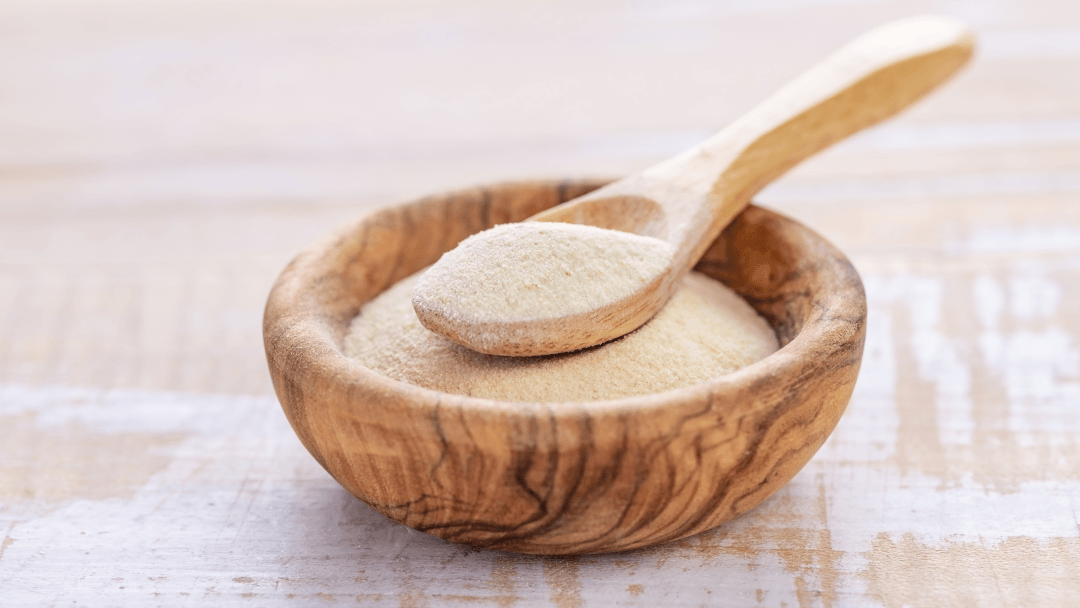
Xanthan gum is one of the most widely used hydrocolloids in food and beverage manufacturing. Used as a thickener, stabilizer, suspending agent, and viscosity builder, it helps manufacturers improve texture, consistency, and shelf-life performance across a wide range of products.
Produced through fermentation by the bacterium Xanthomonas campestris, xanthan gum is valued for its ability to create viscosity at low use levels while remaining functional across a broad range of processing conditions.
For food manufacturers, understanding how xanthan gum works and how to source it effectively is critical for both formulation success and supply chain reliability.
What Is Xanthan Gum?
Xanthan gum is a microbial polysaccharide, specifically an exopolysaccharide, produced through submerged aerobic fermentation using Xanthomonas campestris.
After fermentation, the material is recovered, purified, dried, and milled into a powder. When dispersed in water, xanthan gum creates viscosity and helps stabilize ingredients throughout a formulation.
Because it performs effectively at relatively low inclusion rates, xanthan gum has become one of the most versatile ingredients used in modern food processing.
What this means for formulators: Small dosage changes can significantly impact texture, stability, mouthfeel, and processing performance.
How Does Xanthan Gum Work? What are Its Benefits?
Xanthan gum's functionality is a direct consequence of its molecular structure, so understanding how it behaves in a formulation starts with understanding what the molecule actually is.
Xanthan gum has a cellulose-like backbone of linked glucose units, but unlike cellulose, it carries a trisaccharide side chain on every second unit. Two mannose units bracket a glucuronic acid unit, decorated with variable acetyl and pyruvyl groups. Those charged, bulky side chains keep the molecule from collapsing onto itself. Instead, the chains organize into a rigid, ordered helical conformation in solution.
That ordered structure is the source of nearly every property formulator's reliance. The helices align and weakly associate with one another to form a loose, three-dimensional network throughout the water phase. The network is strong enough to immobilize liquid and suspend particles at rest, but the associations between helices are weak enough to break apart under force and reform almost instantly when the force stops.
Its functionality comes from three key characteristics:
High Viscosity at Low Use Levels
Because the rigid helices build a space-filling network rather than simply dissolving as loose coils, xanthan gum generates substantial viscosity at concentrations well below 1%. This allows manufacturers to achieve texture targets without significantly increasing solids content.
Shear-Thinning (Pseudoplastic) Behavior
Xanthan gum exhibits pseudoplastic, or shear-thinning, behavior. Viscosity decreases during mixing, pumping, pouring, or drinking and then rapidly recovers when the force is removed.
This near-instant recovery is what lets a single ingredient solve two opposing problems at once: a product can sit on the shelf thick enough to hold particles in suspension, yet still pour, pump, and process cleanly. It is also what gives many products their clean-cut, non-stringy flow and stable cling.
Suspension & Stability
Xanthan gum functions as an effective:
- Thickener
- Stabilizer
- Suspending agent
- Binder
- Viscosity builder
These properties help reduce settling, maintain uniformity, and minimize phase separation. Xanthan gum also interacts synergistically with other hydrocolloids. Combined with guar gum, it produces a viscosity boost beyond what either delivers alone, and combined with locust bean gum, it can form a true cohesive gel. These interactions give formulators a way to fine-tune texture without reformulating from scratch.
What this means for your formulation: Xanthan gum is often selected because it delivers both stability and usability, not simply because it thickens.
Common Xanthan Gum Uses in Food Manufacturing
Xanthan gum is used across a broad range of food and beverage applications because it contributes both texture and stability.
Sauces, Dressings & Condiments
Common applications include:
- Salad dressings
- Gravies
- Marinades
- Condiments
- Sauces
Beverages
Xanthan gum is widely used in:
- Protein shakes
- Plant-based milks
- Smoothies
- RTD beverages
- Sports drinks
- Juices
Its suspension properties help keep ingredients evenly distributed throughout shelf life.
Bakery Applications
In both conventional and gluten-free systems, xanthan gum supports:
- Dough handling
- Moisture retention
- Structure development
- Texture consistency
Common products include:
- Gluten-free breads
- Cakes
- Cookies
- Pastries
Dairy & Frozen Desserts
Applications include:
- Yogurt
- Drinkable yogurt
- Sour cream
- Cottage cheese
- Processed cheese
- Ice cream
- Frozen yogurt
- Sorbet
Meat & Alternative Proteins
Xanthan gum contributes functionality in:
- Marinades
- Brines
- Batters
- Breading systems
- Plant-based meat products
- Meat analogs
Confectionery & Specialty Applications
Additional applications include:
- Gummies
- Marshmallows
- Fillings
- Glazes
- Infant nutrition and follow-on formula
What this means for your formulation: Xanthan gum's versatility often allows manufacturers to improve stability, suspension, and texture across multiple product categories using a single hydrocolloid.
Xanthan Gum vs Guar Gum vs Locust Bean Gum
Food manufacturers frequently compare xanthan gum with other hydrocolloids when evaluating formulation options. In fact, xanthan has synergistic interactions with locust bean gum and guar gum, boosting viscosity in these formulations.
|
Attribute |
Xanthan Gum |
Guar Gum |
Locust Bean Gum |
|
Source |
Fermentation |
Guar bean |
Carob tree seed |
|
Primary Function |
Stabilization + viscosity |
Thickening |
Texture development |
|
Suspension Performance |
Excellent |
Moderate |
Moderate |
|
Shear-Thinning |
Strong |
Limited |
Limited |
|
Typical Applications |
Beverages, sauces, dressings |
Dairy, bakery |
Dairy, frozen desserts |
Xanthan Gum vs Guar Gum
While both ingredients provide viscosity, xanthan gum is often preferred when suspension performance, stability, and shear-thinning behavior are important.
Guar gum is frequently selected for cost-effective thickening and texture development.
Xanthan Gum vs Locust Bean Gum
Locust bean gum is often used alongside other hydrocolloids to create specific texture profiles, while xanthan gum can deliver viscosity and suspension functionality independently.
What this means for supplier discussions: The right hydrocolloid depends on processing conditions, texture objectives, and finished-product performance. A knowledgeable supplier should be able to discuss alternatives and formulation tradeoffs—not simply provide pricing.
Regulatory & Quality Considerations
For food manufacturers, ingredient functionality is only one part of the evaluation process. Regulatory compliance, traceability, and documentation are equally important.
Xanthan gum is well established in the global regulatory framework. In the United States, the FDA approves it as a direct food additive under 21 CFR 172.695, which permits its use in food consistent with good manufacturing practice. That same regulation defines what qualifies as food-grade xanthan gum: it must be produced from Xanthomonas campestris by a pure-culture fermentation process using a nonpathogenic, nontoxic strain, be free of viable cells of the organism, and meet specific purity limits (for example, residual isopropyl alcohol not exceeding 750 ppm and a defined minimum solution viscosity). In the European Union, xanthan gum is authorized as food additive E415 and is periodically re-evaluated by EFSA, and internationally, the Joint FAO/WHO Expert Committee on Food Additives (JECFA) has assigned it an Acceptable Daily Intake of "not specified", the category reserved for additives of very low safety concern.
The practical takeaway: because the regulations define the ingredient by both its source process and measurable specifications, the documentation a supplier provides is what proves the material in your hands actually meets that standard.
When evaluating supply options, manufacturers should confirm:
- Product specifications
- Country of origin
- Manufacturing controls
- Traceability programs
- Food safety certifications
- Regulatory documentation
- Supply chain consistency
Common documentation includes:
- Certificates of Analysis (COAs)
- Product specifications
- Allergen statements
- Safety documentation
- Quality certifications
What this means for your supplier conversation: The lowest-cost supplier isn't always the lowest-risk supplier: documentation quality, consistency, and supply continuity matter.
Need a Xanthan Gum Supplier?
North Central Companies helps food and beverage manufacturers source xanthan gum with the documentation, market visibility, and supply support needed to keep production moving.
Contact our team to discuss availability, specifications, and sourcing options.
What to Look for in a Xanthan Gum Supplier
For many manufacturers, supplier selection is just as important as ingredient selection.
- Supply Reliability: Can the supplier source from multiple qualified manufacturers and provide alternatives when markets tighten?
- Documentation Support: Can they consistently provide specifications, COAs, traceability records, and regulatory documentation?
- Technical Expertise: Do they understand formulation requirements and hydrocolloid functionality?
- Market Visibility: Can they provide insight into pricing trends, lead times, and availability?
- Responsiveness: Can they support production schedules when changes are needed?
- Long-Term Partnership: A strong supplier relationship helps reduce sourcing risk, improve planning visibility, and support production continuity.
For manufacturers evaluating bulk xanthan gum for food manufacturing, these factors often matter more than price alone.
Partner with North Central Companies
North Central Companies helps food and beverage manufacturers source xanthan gum and other specialty ingredients through a broad supplier network and responsive customer support.
Whether you're evaluating a new formulation, seeking additional supply options, or managing procurement risk, our team can help identify solutions that align with your technical and sourcing requirements.
Learn more about our Xanthan Gum offerings, explore our Food Processing Ingredients capabilities, or connect with our team to discuss your ingredient sourcing needs.
Frequently Asked Questions
What is xanthan gum, and what is it made from?
Xanthan gum is a microbial polysaccharide produced through the fermentation of carbohydrates by the bacterium Xanthomonas campestris. It is commonly used as a thickener, stabilizer, suspending agent, and viscosity builder in food and beverage manufacturing.
How does xanthan gum work?
When hydrated in water, xanthan gum forms a network that increases viscosity and improves suspension stability. Its shear-thinning behavior allows products to remain stable during storage while still pouring, pumping, or drinking easily.
What is xanthan gum used for in food manufacturing?
Common xanthan gum applications include salad dressings, sauces, beverages, dairy products, frozen desserts, bakery products, meat systems, plant-based foods, confectionery products, and nutritional formulations.
At what percentage is xanthan gum used in food products?
Usage levels vary by application and formulation goals, but xanthan gum is often used at concentrations below 1% due to its strong viscosity-building properties.
What's the difference between xanthan gum and guar gum?
Xanthan gum is produced through fermentation and is known for suspension performance and shear-thinning behavior. Guar gum is plant-derived and is often selected primarily for thickening functionality.
What should I look for in a xanthan gum supplier?
Look for supply reliability, multiple sourcing options, documentation support, technical expertise, regulatory compliance, market visibility, and responsive customer service.
Where is xanthan gum produced, and where does it come from?
Xanthan gum is produced through commercial fermentation using Xanthomonas campestris. Manufacturing facilities are located throughout the world, and sourcing options vary by supplier, specifications, and certifications.