Trends in Pet Food Ingredients: What’s Driving Demand in 2025 & Into 2026
The pet-food world is changing fast. Pet owners increasingly treat cats and dogs as full family members, raising their expectations for nutrition, transparency, and premium ingredients. As those expectations evolve, the landscape of pet-food formulation is being reshaped. For ingredient suppliers like North Central Companies, understanding these shifts in the pet food ingredient market trends is critical to helping stay competitive.
In this guide, we will explore the major drivers behind the pet food ingredient trends for 2025 and look ahead into 2026. We’ll examine how consumer behaviors and macro-trends are influencing formulation choices, and how ingredient suppliers can position themselves as strategic partners to pet-food brands.
Our goal is to help ingredient buyers, pet-food formulators, and brand owners see what’s changing, and how to act.
Why the Changes Matter: Market Size & Context
To frame the discussion:
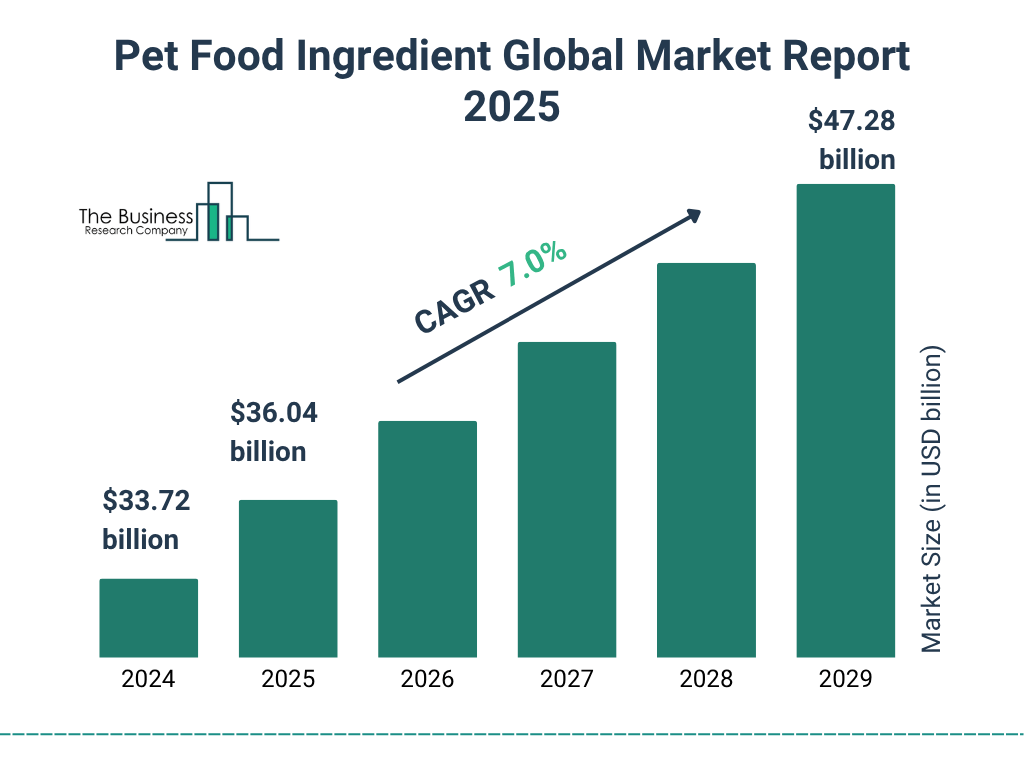
- According to a recent report, the global pet-food ingredient market is projected at approx US$36.04 billion in 2025, with a forecast to reach US$47.28 billion by 2034.
- A U.S. analysis shows that retail dog and cat food sales in 2024 reached about US$51.7 billion, covering approximately 9.8 million tons of product.
- Other data indicates that ingredient purchases by pet-food manufacturers are increasing the upstream impact on farms, processors and suppliers: e.g., between 2020 and 2025 the average pet food plant’s ingredient purchases rose ~7.5 %, while the upstream farm and processor sales resulting from those purchases increased ~92%.
In short: the pet-food industry remains robust, and the pet food ingredient market trends show not only growth in volume but also meaningful shifts in what kinds of ingredients are in demand. That’s a big opportunity for ingredient suppliers who align with the right trends.

Major Ingredient Trends Shaping 2025 & Beyond
Here are the headline trends in pet-food ingredient formulation and how they are influencing supplier strategy.
1. Human-grade, Minimal Processing & Ingredient Transparency
Pet-food consumers expect higher-end ingredients, processing methods, and clear sourcing, essentially mirroring human-food trends.
What this means for ingredient suppliers:
- Emphasising ingredient origin, minimal processing, and “clean label” credentials becomes a differentiator.
- Offering ingredients that can support claims like “real meat & vegetables,” “no artificial preservatives,” or “fit for human consumption” (where applicable) will be key.
- Being able to provide traceability and documentation is increasingly expected.
2. Novel Proteins & Alternative Protein Sources
The era of “chicken & beef only” is shifting. Pet-food brands are looking to novel protein sources like duck, rabbit, venison, bison, and lamb to appeal to pet-parents seeking differentiation, allergen avoidance, or sustainability credentials.
3. Grain-free, Ancient-grain, & Carbohydrate Re-thinking
While “grain-free” has been around for a while, the conversation is maturing. Pet owners are now more informed about the role of carbohydrates, fibers, and plant-based ingredients in overall pet health (gut health, weight management, etc.). Some brands are opting for “ancient grains,” pulses, or novel starches rather than simply removing grains.
4. Functional Health Ingredients: Gut Health, Joint Support, & Immune Support
Consumers increasingly view pet nutrition as a health investment. Not just “feeding,” but supporting longevity, wellness, and quality of life.
Functional ingredient trends include:
- Prebiotics, probiotics and post-biotics for gut health
- Omega-3/6 fatty acids and specialized fats for cognitive, skin or joint support
- Botanicals, adaptogens and botanical extracts (within regulatory limits)
- Ingredients targeting aging pets, weight management, or allergy support
5. Sustainability, Up-cycled Ingredients & Supply-chain Transparency
Sustainability continues to play a growing role in formulation choices. The 2025 pet-food ingredient report highlights that 44% of pet-food ingredients are derived from up-cycled materials (for example, animal-byproducts, coproducts from human-food manufacturing) in 2024.
What this means:
- Ingredient suppliers should emphasise waste-reduction and low-carbon footprint sourcing.
- Brands will look for partners who can support claims such as “up-cycled protein,” “responsibly sourced protein ingredient,” or “by-product derived fat/oil.”
- Suppliers who can consistently provide transparency (origin, processing, certifications) will have a competitive edge.
6. Customization, Niche Formulations & Premiumisation
The pet-food market is not one-size-fits-all. Brand owners are differentiating by life stage, breed size, functional need, ingredient story, and premium positioning.
Implications for ingredient suppliers:
- Offer versatility in your ingredient portfolio: from mass-market to super-premium, from functional to niche (e.g., breed-specific, small-batch, fresh/frozen kits).
- Provide technical support in formulation, regulatory, and marketing. E.g., help brands translate ingredient benefits into consumer-facing claims.
- Build packaging, logistics and niche supply-chain models (smaller lot sizes, fresh/low-moisture ingredients, etc.) to meet premium brand demands.

Why Choosing the Right Ingredient Supplier Matters More Than Ever
As consumer expectations rise and formulations become more complex, the ingredient suppliers you partner with can make or break your next product launch.
For pet-food brands navigating the fast-moving landscape of human-grade, functional, and sustainable formulations, working with a reputable, knowledgeable supplier is a strategic advantage.
Here’s why finding the right partner, like North Central Companies, is essential for staying ahead of today’s pet food ingredient trends.
1. Trusted Expertise in a Rapidly Evolving Market
The pet-food industry is advancing faster than ever. From novel proteins and gut-health ingredients to shifting regulations and sustainability demands, there’s no shortage of moving parts. Partnering with a supplier who understands these dynamics means you gain a built-in guide through every step of formulation and sourcing.
A reputable supplier helps brands interpret emerging data, validate quality, and anticipate what’s coming next. North Central’s decades-long experience “at the intersection of farm and factory” gives brands insight into both agricultural sourcing and finished-product requirements — a combination that few suppliers can offer.
2. Assurance of Quality, Consistency, & Compliance
As brands aim to differentiate with clean-label and functional products, ingredient integrity is non-negotiable. A trustworthy supplier ensures every ingredient is traceable, consistent, and compliant with the latest pet-food regulations, saving your brand from costly reformulations or label recalls.
North Central maintains rigorous quality-control processes and transparent sourcing relationships, giving brands confidence that what’s on the label truly reflects what’s in the bag.
3. Access to Emerging & Specialty Ingredients
The next wave of innovation often depends on ingredient access, whether it’s a new functional prebiotic, a novelty protein, or a sustainable starch. A connected supplier can open the door to those opportunities long before they hit the mainstream market.
North Central’s broad sourcing network enables brands to explore and scale with emerging ingredient categories, helping them stay first-to-market with trends like high-value proteins, ancient grains, or clean-label fibers.
4. Strategic Support Beyond Supply
In a world where agility and differentiation are key, the right supplier acts as a true extension of your R&D and marketing teams. They can provide formulation advice, regulatory context, and even consumer-ready messaging around ingredient benefits.
By working with a knowledgeable partner like North Central, brands gain:
- Guidance on how to position ingredients within evolving “human-grade” and “sustainable” narratives
- Support with formulation challenges, logistics, and storage so innovation doesn’t stall
- A proactive partner who anticipates needs before they become roadblocks
5. Shared Commitment to Sustainability & Transparency
Consumers want to know where their pet’s food comes from, and that includes the ingredients behind the label. Ingredient suppliers that prioritize transparency, ethical sourcing, and sustainability help brands build that trust authentically.
North Central’s emphasis on traceability and responsible sourcing aligns perfectly with what today’s pet owners expect. By partnering with suppliers who value these same principles, brands can confidently tell their sustainability story and back it up with real data.
Looking Ahead: What to Watch For in 2026 & Beyond
As we move into 2026, several undercurrents may further shape the pet-food ingredient landscape:
- Increased segmentation: As quality importance grows, we’ll see even more niche diets (e.g., breed-specific, age-specific, therapeutic functional diets), meaning more demand for tailored ingredients and specialty blends.
- Technology-enabled ingredients: Cultivated proteins, insect-derived proteins, fermentation-based proteins may gain traction (though regulatory and cost hurdles remain).
- Holistic wellness & pet health lifecycle: Formulations will increasingly reflect life-stage, lifestyle (indoor vs. active), and health goals (weight-support, gut-health, dental, immune). Ingredients that support these will be in demand.
- Omnichannel & e-commerce influence: With more pets being purchased and fed via subscription models, ingredient choices that support convenience formats (e.g., freeze-dried, fresh/frozen, refrigerated) will grow.
- Transparency & ethics as table-stakes: Brands unable to deliver credible stories about sourcing, ingredient integrity or sustainability may fall behind. Suppliers must invest accordingly.
- Cost pressures & supply-chain resilience: While premium formulations grow, economic headwinds may push some consumers back toward value offerings, yet still expecting quality. Suppliers who can help brands maintain quality at cost-effective levels will be valuable.
Why North Central Companies is the Partner of Choice
When a pet-food brand wants to move ahead of the curve, whether launching a “human-grade” kibble, a novel-protein premium line or a grain-free functional snack, they need a supplier who understands both the ingredient science and the market story.
Our team at North Central can fill that role. Contact us or request a quote today!
Key Takeaways: Pet Food Ingredient Demands in 2025 & into 2026
- The pet-food ingredient market trends in 2025 and into 2026 are being driven by pet-owners’ expectations for premium, transparent, functional and sustainable diets.
- Ingredient suppliers must respond with human-grade or minimally processed ingredients, novel proteins, functional health ingredients, clean-label carbohydrate/fiber solutions and sustainable sourcing.
- Collaboration with brand owners is essential: from formulation support to marketing value, to supply-chain flexibility.
- Articulating your role as more than a commodity provider, but as a strategic trend-aware partner, will differentiate you in the pet-food ingredients space.
- Looking ahead, segmentation, technology-driven ingredient sourcing, wellness positioning and supply-chain transparency will be key for 2026 and beyond.